این پرامپت برای خانم ها طراحی شده است که با دریافت تصویر خروجی های پاییزی را تحویل دهد
پرامپت اسقبال پاییزی
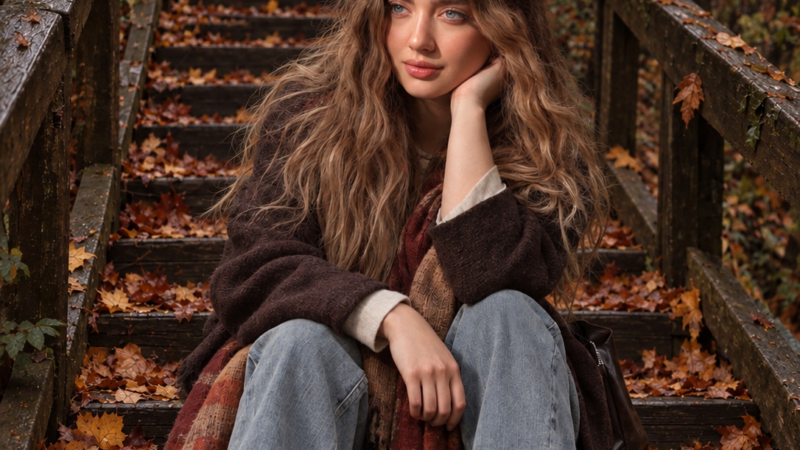
توضیحات
پرامپت پاییزی نشسته بر روی پله
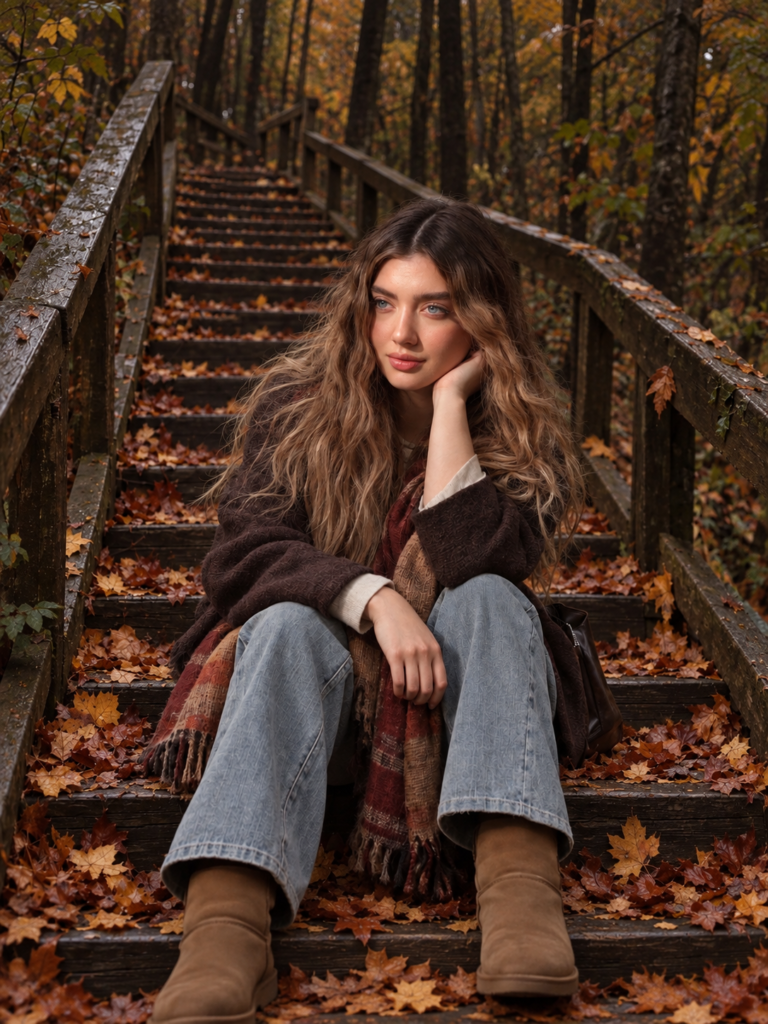
Create an ultra-realistic cinematic autumn portrait using the uploaded reference photograph as the sole identity and appearance reference for the subject.
IDENTITY PRESERVATION — ABSOLUTE HIGHEST PRIORITY:
The subject must remain the exact same real person shown in the uploaded reference image.
Use the uploaded photograph as the sole source of facial identity.
Preserve exactly:
— facial structure and proportions
— head shape
— face shape
— exact eye shape, size, spacing, and position
— eyebrows
— nose shape and proportions
— natural lips and mouth shape
— jawline and chin
— cheekbones
— ears when visible
— skin tone
— natural skin texture and pores
— natural facial asymmetry
— hairline
— all unique and recognizable facial characteristics visible in the reference photograph
Do not beautify, reconstruct, reshape, idealize, smooth, stylize, or reinterpret the face.
Do not enlarge the eyes.
Do not narrow or reshape the nose.
Do not enlarge or reshape the lips.
Do not sharpen or modify the jawline.
Do not alter the cheekbones.
Do not create artificial facial symmetry.
Do not change the apparent age or ethnicity.
Do not replace the subject with a generic attractive model.
Do not create a lookalike or approximate version of the person.
The final image must unmistakably depict the exact same real person shown in the uploaded reference photograph.
The reference image determines WHO the subject is.
The written prompt determines only the environment, lighting, atmosphere, clothing, pose, and photographic treatment.
If any aesthetic or scene instruction conflicts with identity preservation, preserving the exact facial identity must take priority.
SCENE:
Place the subject in a dark, atmospheric autumn forest.
The subject is sitting naturally on an outdoor wooden staircase surrounded by dense woodland.
The staircase is covered with naturally fallen autumn leaves.
Wooden railings run along both sides of the stairs.
The surrounding forest should feel deep, quiet, slightly dark, and naturally atmospheric.
The background consists of dense autumn trees and vegetation, remaining visible and recognizable rather than being heavily blurred.
AUTUMN ENVIRONMENT:
Cover portions of the wooden steps and surrounding ground with naturally scattered fallen leaves.
Use realistic autumn foliage with subtle variations of:
— muted brown
— deep rust
— burnt orange
— dark red
— faded yellow
— subdued earthy green
Avoid overly saturated or artificially colorful foliage.
The autumn environment should feel authentic, slightly damp, cool, and naturally aged.
POSE AND COMPOSITION:
The subject sits naturally on the wooden steps.
Use a relaxed, candid seated posture rather than a highly controlled fashion pose.
The legs may be positioned comfortably apart as appropriate to the natural seated posture.
The arms and hands should rest naturally and comfortably.
Keep human anatomy physically accurate, especially the hands, fingers, arms, legs, and body proportions.
The photograph should feel like a genuine spontaneous moment rather than a carefully staged studio portrait.
LIGHTING:
Use soft, diffused natural daylight.
The light should be muted and gentle, consistent with an overcast autumn day inside a forest.
Create natural, realistic shadows across:
— the face
— hair
— clothing
— wooden stairs
— fallen leaves
— surrounding vegetation
The subject must be illuminated by the same environmental light as the rest of the scene.
Do not artificially brighten or separately illuminate the face.
Avoid studio lighting, beauty lighting, artificial rim lighting, excessive glow, or dramatic synthetic highlights.
COLOR AND MOOD:
Use a moody autumn aesthetic.
Keep the overall color palette deep, subdued, earthy, and neutral.
Avoid excessive saturation.
Maintain natural contrast and realistic tonal transitions.
The atmosphere should feel quiet, intimate, slightly melancholic, cozy, cinematic, and authentically autumnal.
SKIN AND MATERIAL REALISM:
Preserve realistic skin texture.
Keep visible natural pores, fine facial details, subtle imperfections, and natural tonal variation.
Do not apply artificial skin smoothing or beauty-filter effects.
Render all fabrics realistically with visible weave, folds, thickness, weight, and natural interaction with the body.
Wood, leaves, leather, fabric, hair, and skin must all retain believable physical texture.
PHOTOGRAPHIC STYLE:
Use a cinematic RAW photographic aesthetic.
The image should feel like a genuine unstaged frame captured during a real moment.
Use:
— realistic camera exposure
— natural dynamic range
— subtle film-like grain
— realistic skin rendering
— authentic fabric texture
— natural shadow transitions
— restrained contrast
— realistic depth
— subtle cinematic tonality
— organic photographic imperfections
Add only a light layer of film grain.
Do not make the image excessively clean, digitally perfect, glossy, or CGI-like.
DEPTH OF FIELD:
Do NOT use strong background blur.
The forest environment, wooden staircase, railings, and fallen leaves should remain sufficiently detailed and recognizable.
Use only subtle, optically believable depth separation.
Avoid artificial portrait-mode blur or extreme bokeh.
FINAL LOOK:
Ultra-photorealistic.
Moody autumn aesthetic.
Muted neutral colors.
Soft diffused daylight.
Natural shadows.
Realistic skin.
Realistic fabric textures.
Subtle film grain.
Cinematic RAW photography.
Authentic candid moment.
No excessive background blur.
FINAL IDENTITY LOCK:
The uploaded reference photograph is the absolute authority for the subject’s identity.
Do not adapt the face to the cinematic aesthetic.
Adapt the cinematic aesthetic around the existing face.
Lighting, color grading, pose, clothing, environment, and camera treatment may change, but the subject’s facial identity must not.
The final result must look like a real photograph of the exact same person from the reference image sitting on wooden steps in a dark autumn forest — not an AI-generated interpretation, beautified variation, or lookalike.
IDENTITY PRESERVATION — ABSOLUTE HIGHEST PRIORITY:
The subject must remain the exact same real person shown in the uploaded reference image.
Use the uploaded photograph as the sole source of facial identity.
Preserve exactly:
— facial structure and proportions
— head shape
— face shape
— exact eye shape, size, spacing, and position
— eyebrows
— nose shape and proportions
— natural lips and mouth shape
— jawline and chin
— cheekbones
— ears when visible
— skin tone
— natural skin texture and pores
— natural facial asymmetry
— hairline
— all unique and recognizable facial characteristics visible in the reference photograph
Do not beautify, reconstruct, reshape, idealize, smooth, stylize, or reinterpret the face.
Do not enlarge the eyes.
Do not narrow or reshape the nose.
Do not enlarge or reshape the lips.
Do not sharpen or modify the jawline.
Do not alter the cheekbones.
Do not create artificial facial symmetry.
Do not change the apparent age or ethnicity.
Do not replace the subject with a generic attractive model.
Do not create a lookalike or approximate version of the person.
The final image must unmistakably depict the exact same real person shown in the uploaded reference photograph.
The reference image determines WHO the subject is.
The written prompt determines only the environment, lighting, atmosphere, clothing, pose, and photographic treatment.
If any aesthetic or scene instruction conflicts with identity preservation, preserving the exact facial identity must take priority.
SCENE:
Place the subject in a dark, atmospheric autumn forest.
The subject is sitting naturally on an outdoor wooden staircase surrounded by dense woodland.
The staircase is covered with naturally fallen autumn leaves.
Wooden railings run along both sides of the stairs.
The surrounding forest should feel deep, quiet, slightly dark, and naturally atmospheric.
The background consists of dense autumn trees and vegetation, remaining visible and recognizable rather than being heavily blurred.
AUTUMN ENVIRONMENT:
Cover portions of the wooden steps and surrounding ground with naturally scattered fallen leaves.
Use realistic autumn foliage with subtle variations of:
— muted brown
— deep rust
— burnt orange
— dark red
— faded yellow
— subdued earthy green
Avoid overly saturated or artificially colorful foliage.
The autumn environment should feel authentic, slightly damp, cool, and naturally aged.
POSE AND COMPOSITION:
The subject sits naturally on the wooden steps.
Use a relaxed, candid seated posture rather than a highly controlled fashion pose.
The legs may be positioned comfortably apart as appropriate to the natural seated posture.
The arms and hands should rest naturally and comfortably.
Keep human anatomy physically accurate, especially the hands, fingers, arms, legs, and body proportions.
The photograph should feel like a genuine spontaneous moment rather than a carefully staged studio portrait.
LIGHTING:
Use soft, diffused natural daylight.
The light should be muted and gentle, consistent with an overcast autumn day inside a forest.
Create natural, realistic shadows across:
— the face
— hair
— clothing
— wooden stairs
— fallen leaves
— surrounding vegetation
The subject must be illuminated by the same environmental light as the rest of the scene.
Do not artificially brighten or separately illuminate the face.
Avoid studio lighting, beauty lighting, artificial rim lighting, excessive glow, or dramatic synthetic highlights.
COLOR AND MOOD:
Use a moody autumn aesthetic.
Keep the overall color palette deep, subdued, earthy, and neutral.
Avoid excessive saturation.
Maintain natural contrast and realistic tonal transitions.
The atmosphere should feel quiet, intimate, slightly melancholic, cozy, cinematic, and authentically autumnal.
SKIN AND MATERIAL REALISM:
Preserve realistic skin texture.
Keep visible natural pores, fine facial details, subtle imperfections, and natural tonal variation.
Do not apply artificial skin smoothing or beauty-filter effects.
Render all fabrics realistically with visible weave, folds, thickness, weight, and natural interaction with the body.
Wood, leaves, leather, fabric, hair, and skin must all retain believable physical texture.
PHOTOGRAPHIC STYLE:
Use a cinematic RAW photographic aesthetic.
The image should feel like a genuine unstaged frame captured during a real moment.
Use:
— realistic camera exposure
— natural dynamic range
— subtle film-like grain
— realistic skin rendering
— authentic fabric texture
— natural shadow transitions
— restrained contrast
— realistic depth
— subtle cinematic tonality
— organic photographic imperfections
Add only a light layer of film grain.
Do not make the image excessively clean, digitally perfect, glossy, or CGI-like.
DEPTH OF FIELD:
Do NOT use strong background blur.
The forest environment, wooden staircase, railings, and fallen leaves should remain sufficiently detailed and recognizable.
Use only subtle, optically believable depth separation.
Avoid artificial portrait-mode blur or extreme bokeh.
FINAL LOOK:
Ultra-photorealistic.
Moody autumn aesthetic.
Muted neutral colors.
Soft diffused daylight.
Natural shadows.
Realistic skin.
Realistic fabric textures.
Subtle film grain.
Cinematic RAW photography.
Authentic candid moment.
No excessive background blur.
FINAL IDENTITY LOCK:
The uploaded reference photograph is the absolute authority for the subject’s identity.
Do not adapt the face to the cinematic aesthetic.
Adapt the cinematic aesthetic around the existing face.
Lighting, color grading, pose, clothing, environment, and camera treatment may change, but the subject’s facial identity must not.
The final result must look like a real photograph of the exact same person from the reference image sitting on wooden steps in a dark autumn forest — not an AI-generated interpretation, beautified variation, or lookalike.
لذت بردن از پاییز در ماشین
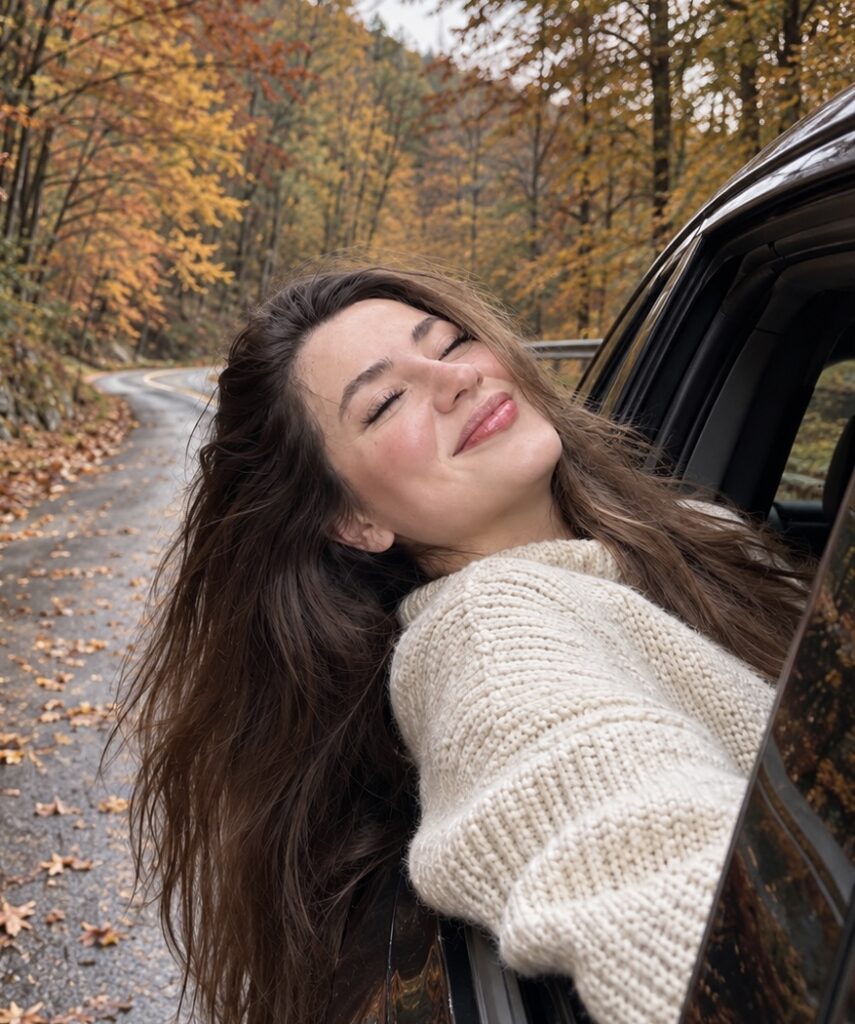
Create ONE ultra-realistic autumn lifestyle photograph in a 4:3 aspect ratio using the provided reference images with two strictly separated purposes.
REFERENCE IMAGE ROLES — CRITICAL:
REFERENCE IMAGE 1 = IDENTITY REFERENCE ONLY.
Use Reference Image 1 as the sole and exclusive source for the subject’s facial identity, recognizable appearance, facial anatomy, skin characteristics, and individual features.
REFERENCE IMAGE 2 = POSE AND COMPOSITION REFERENCE ONLY.
Use Reference Image 2 only to understand and recreate:
— the subject’s position inside the vehicle
— the backward leaning pose
— the head and neck angle
— the direction of the torso
— the relationship between the body and the open car door/window
— the camera perspective
— the general framing
— the placement of the car
— the autumn-road composition
DO NOT use Reference Image 2 as a source of facial identity, facial features, skin appearance, hair color, ethnicity, or recognizable appearance.
The woman in Reference Image 2 is NOT the identity of the final subject.
The final subject must have the exact recognizable identity of the person shown in Reference Image 1.
==================================================
IDENTITY PRESERVATION — ABSOLUTE HIGHEST PRIORITY
==================================================
The final photograph must depict the exact same real person shown in Reference Image 1.
Reference Image 1 is the sole identity source.
Preserve her exact recognizable facial identity and natural individuality, including:
— exact facial structure
— exact facial proportions
— exact head shape
— exact face shape
— exact eye shape and spacing
— eyebrows
— nose shape and proportions
— lips
— mouth shape
— jawline
— cheekbones
— ears when visible
— forehead proportions
— skin tone
— natural skin texture
— visible pores and fine skin detail
— natural facial asymmetry
— hairline
— all distinctive facial characteristics visible in Reference Image 1
Do NOT average the faces of the two reference images.
Do NOT transfer facial characteristics from Reference Image 2.
Do NOT make the subject resemble the woman in Reference Image 2.
Do NOT beautify, idealize, reconstruct, reshape, smooth, stylize, or reinterpret the face.
Do NOT create a conventionally attractive substitute or generic fashion model.
Do NOT create a lookalike or approximate version.
Do NOT alter:
— eye size or shape
— eye spacing
— eyebrow structure
— nose width or shape
— lip size or shape
— jaw width
— cheekbone structure
— forehead proportions
— facial width
— skin tone
— apparent age
— ethnicity
— distinctive facial characteristics
Preserve natural facial asymmetry.
Preserve realistic skin texture.
No artificial facial symmetry.
No beauty-filter face.
No plastic skin.
No facial reconstruction.
If maintaining the requested pose would cause the face to become less recognizable, slightly adapt the head angle rather than altering the facial anatomy.
IDENTITY ACCURACY TAKES PRIORITY OVER EVERY OTHER INSTRUCTION.
==================================================
EXACT POSE — VERY IMPORTANT
==================================================
Recreate the distinctive pose and body positioning demonstrated in Reference Image 2.
The subject is INSIDE the car.
Her lower body and hips remain inside the vehicle.
She is NOT standing beside the car.
She is NOT standing on the road.
She is NOT simply leaning against the exterior of the vehicle.
Instead, she leans her UPPER BODY dramatically but naturally BACKWARD AND OUTWARD from the open side door/window area of the car.
Her body must visibly originate from INSIDE the vehicle.
The open vehicle frame must clearly surround and visually connect to her body so there is absolutely no ambiguity that she is leaning outward from inside the car.
Her torso extends diagonally outward from the vehicle.
Her upper back forms a gentle natural arch.
Her shoulders move backward.
Her chest angles slightly upward.
Her neck extends naturally backward.
Her head is tilted significantly backward toward the sky.
Her chin points gently upward.
Her face is shown primarily in a natural three-quarter/profile orientation created by the backward head position.
Her eyes are peacefully closed.
Her lips remain naturally relaxed.
The expression communicates calmness, freedom, and enjoyment of the cool autumn air.
The pose should feel spontaneous rather than choreographed.
Avoid exaggerated fashion posing.
Avoid anatomically impossible bending.
The spine, shoulders, neck, arms, and torso must maintain believable human anatomy.
==================================================
CRITICAL BODY / VEHICLE RELATIONSHIP
==================================================
This relationship must be visually unmistakable:
LOWER BODY = INSIDE VEHICLE.
HIPS = INSIDE VEHICLE.
UPPER BODY = EXTENDING OUTWARD.
SHOULDERS = OUTSIDE VEHICLE.
HEAD = OUTSIDE VEHICLE.
The subject appears to have been sitting or positioned inside the car and then leaned her upper body backward through the open side door/window area to enjoy the autumn air.
Do NOT depict her standing outside the vehicle.
Do NOT show both feet planted on the road.
Do NOT make her look as though she walked up to the car and leaned against it.
Do NOT place her body completely outside the vehicle.
The visible open door/window structure must make her position inside the car obvious.
==================================================
HEAD POSITION AND EXPRESSION
==================================================
Recreate the peaceful backward head position from Reference Image 2.
The head tilts backward naturally.
The chin is elevated.
The neck remains anatomically realistic and elegant.
The eyes are naturally closed.
The mouth is relaxed.
Do not force a large smile.
A very subtle peaceful expression is acceptable.
IMPORTANT:
Even though the head angle differs from Reference Image 1, DO NOT reconstruct or reinterpret the face to accommodate the new angle.
Maintain the facial anatomy and identity defined by Reference Image 1.
The final person must still be immediately recognizable as the exact same person from Reference Image 1.
==================================================
HAIR
==================================================
Give the subject long, dark, naturally voluminous hair.
Keep the original recognizable hairline from Reference Image 1.
The hair should fall dramatically backward and downward because of:
— gravity
— the backward body position
— a gentle autumn breeze
The hair flows freely behind her toward the road and forest.
Create individually visible natural hair strands.
Some strands may lift slightly in the breeze.
Other strands should fall naturally under gravity.
The movement should feel organic and physically believable.
Do NOT create excessively perfect commercial hair.
Do NOT create artificial fan-blown hair.
Do NOT let the hair obscure the important facial features needed for identity recognition.
==================================================
WARDROBE
==================================================
Dress the subject in a very oversized knitted sweater.
Color:
soft creamy white / warm off-white.
The sweater should look:
— extremely cozy
— loose
— thick
— soft
— naturally oversized
— slightly heavy
The sleeves are long and loose and extend toward or partially over the hands.
The knit must contain realistic textile detail:
— individual fibers
— knit loops
— natural folds
— fabric thickness
— stretching
— compression
— realistic weight
— natural deformation caused by the leaning pose
The sweater must react realistically to gravity and the position of the torso.
Lower clothing should remain mostly hidden because the lower body is inside the vehicle.
Avoid tight clothing.
Avoid glamorous fashion styling.
==================================================
SKIN AND MAKEUP
==================================================
Preserve realistic skin.
Visible natural fine texture and pores.
Use extremely subtle, natural makeup suitable for a casual autumn lifestyle photograph.
The makeup must NOT modify facial anatomy.
Use:
— natural complexion
— subtle eye definition
— restrained natural lashes
— very subtle lip gloss
No heavy contouring.
No enlarged eyes.
No artificial eyelashes.
No narrowed nose.
No reshaped lips.
No sharpened jaw.
No excessive blush.
No skin smoothing.
No beauty filter.
==================================================
CAR
==================================================
Use a realistic dark-colored modern passenger car.
The car occupies primarily the RIGHT side of the composition, similar to Reference Image 2.
The relevant side door/window area is fully open.
The door/window frame remains clearly visible.
The vehicle should have:
— realistic glossy paint
— subtle autumn-tree reflections
— realistic glass
— physically accurate metal surfaces
— natural environmental reflections
— realistic interior shadows
Do not make the car the primary subject.
The woman remains the visual focus.
The car exists primarily to establish the pose and road-trip context.
==================================================
CAMERA POSITION AND COMPOSITION
==================================================
Use Reference Image 2 as the primary composition guide.
The photographer is OUTSIDE the vehicle.
The camera is relatively close to the subject.
Use a slightly elevated candid smartphone perspective looking toward the subject and the road behind her.
The composition should prominently show:
— the subject leaning backward from inside the vehicle
— her flowing hair
— the open car frame on the right
— the winding autumn road
— dense forest surrounding the road
The road begins near the foreground and continues deep into the background.
It gently curves and disappears into the autumn forest.
The subject occupies a strong foreground position.
The car remains visible along the right edge.
The forest and road create strong natural depth.
The framing should feel spontaneous and slightly imperfect, as though someone traveling with her quickly captured the moment on a smartphone.
Do NOT create perfectly centered commercial composition.
Do NOT make it look like a fashion advertisement.
==================================================
ENVIRONMENT
==================================================
Place the vehicle on a narrow, quiet forest road during peak autumn.
Dense woodland surrounds both sides of the road.
Use naturally varied autumn foliage:
— burnt orange
— rusty red
— deep red
— golden yellow
— warm brown
— muted green
Some trees still retain dense autumn leaves.
Others have partially lost their foliage.
The road and roadside contain scattered fallen leaves.
Include realistic environmental details:
— fallen leaves
— small branches
— darker damp soil
— irregular vegetation
— tree trunks
— patches of moss
— uneven roadside foliage
— scattered leaves near the vehicle
Avoid decorative or perfectly arranged foliage.
Nature must look random and authentic.
==================================================
ROAD
==================================================
Create a realistic narrow paved forest road.
The road stretches behind the subject and curves gently through the forest.
The asphalt should contain subtle natural imperfections.
Some areas may appear slightly damp from autumn weather.
Scattered leaves naturally cover portions of the asphalt.
The road must create strong perspective depth.
Do not create an unrealistically pristine road.
==================================================
LIGHTING
==================================================
Use soft, diffused natural daylight from an overcast autumn sky.
The light should be:
— soft
— slightly cool
— muted
— natural
— evenly diffused
No direct harsh sunlight.
No studio lights.
No artificial rim lighting.
No glamour lighting.
No exaggerated cinematic glow.
The same environmental light must naturally illuminate:
— face
— neck
— hair
— sweater
— hands
— vehicle
— road
— trees
The subject must appear physically present in the environment.
Do NOT illuminate the face independently from the scene.
Maintain believable shadow direction and intensity.
==================================================
PHOTOGRAPHIC AESTHETIC
==================================================
The photograph should resemble an authentic premium smartphone photograph captured spontaneously during an autumn road trip.
Use:
— realistic smartphone optics
— subtle wide-angle characteristics
— natural perspective
— realistic optical distortion
— high dynamic range without artificial HDR
— realistic exposure
— natural shadow detail
— subtle photographic imperfections
— realistic depth of field
The background should remain clearly recognizable.
Do NOT use extreme portrait-mode blur.
Do NOT distort the face using excessive wide-angle perspective.
The result should feel like a genuine candid photograph rather than a professional photoshoot.
==================================================
AUTUMN ATMOSPHERE
==================================================
Create the feeling of cool, fresh autumn air.
A very gentle breeze moves the subject’s hair and a few nearby leaves.
The environment feels:
— quiet
— intimate
— peaceful
— slightly nostalgic
— cozy
— spontaneous
— authentic
The subject appears to be enjoying a peaceful moment during an autumn drive through the forest.
The image may have a refined Pinterest / Instagram lifestyle feeling, but it must remain grounded in photographic realism.
==================================================
REALISM REQUIREMENTS
==================================================
Ultra-photorealistic photography.
Natural human anatomy.
Correct shoulder anatomy.
Correct neck anatomy.
Correct torso anatomy.
Realistic hands.
Five anatomically correct fingers per visible hand.
Realistic hair physics.
Realistic gravity.
Realistic knitted textile physics.
Natural skin texture.
Visible fine facial detail.
Realistic vehicle geometry.
Accurate vehicle reflections.
Realistic glass.
Realistic asphalt.
Natural foliage.
Physically believable lighting.
Natural atmospheric perspective.
No CGI appearance.
No illustration.
No artificial beauty-filter aesthetic.
==================================================
AVOID / NEGATIVE CONSTRAINTS
==================================================
Do NOT use Reference Image 2 for identity.
Do NOT merge the faces from Reference Images 1 and 2.
Do NOT reproduce the facial features of the woman in Reference Image 2.
Do NOT create a generic beautiful woman.
Do NOT create a lookalike.
Do NOT alter facial proportions.
Do NOT beautify the identity.
Do NOT smooth the skin.
Do NOT create plastic skin.
Do NOT enlarge the eyes.
Do NOT narrow or reshape the nose.
Do NOT modify the lips.
Do NOT sharpen or narrow the jaw.
Do NOT change apparent age.
Do NOT change ethnicity.
Do NOT create artificial facial symmetry.
Do NOT create a doll-like face.
Do NOT create a CGI face.
Do NOT use excessive makeup.
Do NOT make the subject stand beside the car.
Do NOT place both feet on the road.
Do NOT make the subject lean against the outside of the car.
Do NOT position the entire body outside the vehicle.
Do NOT make the pose anatomically impossible.
Do NOT use excessive background blur.
Do NOT create artificial autumn colors.
Do NOT create excessive hair movement.
Do NOT create fashion-campaign lighting.
Do NOT over-retouch the photograph.
==================================================
FINAL PRIORITY ORDER
==================================================
PRIORITY 1:
Exact recognizable identity from Reference Image 1.
PRIORITY 2:
The inside-the-car, backward-and-outward leaning pose demonstrated in Reference Image 2.
PRIORITY 3:
Natural human anatomy and physically believable body positioning.
PRIORITY 4:
Autumn forest road, dark car, oversized cream sweater, flowing hair, and environmental realism.
PRIORITY 5:
Candid smartphone photographic aesthetic.
Reference Image 1 defines WHO the subject is.
Reference Image 2 defines ONLY HOW the subject is positioned and HOW the photograph is composed.
Never allow the facial appearance of Reference Image 2 to influence the identity.
The final result must look like a genuine candid photograph of the EXACT SAME REAL PERSON from Reference Image 1, sitting/positioned inside a dark car and leaning her upper body backward and outward through the open side door/window area, with her head tilted peacefully backward, eyes closed, and long hair flowing naturally toward the autumn forest road.
The image must NOT look like an AI-generated variation, a beautified reconstruction, a face blend, or a similar-looking person.
OUTPUT:
One single ultra-realistic photograph.
Aspect ratio: 4:3.
No text.
No watermark.
No collage.
REFERENCE IMAGE ROLES — CRITICAL:
REFERENCE IMAGE 1 = IDENTITY REFERENCE ONLY.
Use Reference Image 1 as the sole and exclusive source for the subject’s facial identity, recognizable appearance, facial anatomy, skin characteristics, and individual features.
REFERENCE IMAGE 2 = POSE AND COMPOSITION REFERENCE ONLY.
Use Reference Image 2 only to understand and recreate:
— the subject’s position inside the vehicle
— the backward leaning pose
— the head and neck angle
— the direction of the torso
— the relationship between the body and the open car door/window
— the camera perspective
— the general framing
— the placement of the car
— the autumn-road composition
DO NOT use Reference Image 2 as a source of facial identity, facial features, skin appearance, hair color, ethnicity, or recognizable appearance.
The woman in Reference Image 2 is NOT the identity of the final subject.
The final subject must have the exact recognizable identity of the person shown in Reference Image 1.
==================================================
IDENTITY PRESERVATION — ABSOLUTE HIGHEST PRIORITY
==================================================
The final photograph must depict the exact same real person shown in Reference Image 1.
Reference Image 1 is the sole identity source.
Preserve her exact recognizable facial identity and natural individuality, including:
— exact facial structure
— exact facial proportions
— exact head shape
— exact face shape
— exact eye shape and spacing
— eyebrows
— nose shape and proportions
— lips
— mouth shape
— jawline
— cheekbones
— ears when visible
— forehead proportions
— skin tone
— natural skin texture
— visible pores and fine skin detail
— natural facial asymmetry
— hairline
— all distinctive facial characteristics visible in Reference Image 1
Do NOT average the faces of the two reference images.
Do NOT transfer facial characteristics from Reference Image 2.
Do NOT make the subject resemble the woman in Reference Image 2.
Do NOT beautify, idealize, reconstruct, reshape, smooth, stylize, or reinterpret the face.
Do NOT create a conventionally attractive substitute or generic fashion model.
Do NOT create a lookalike or approximate version.
Do NOT alter:
— eye size or shape
— eye spacing
— eyebrow structure
— nose width or shape
— lip size or shape
— jaw width
— cheekbone structure
— forehead proportions
— facial width
— skin tone
— apparent age
— ethnicity
— distinctive facial characteristics
Preserve natural facial asymmetry.
Preserve realistic skin texture.
No artificial facial symmetry.
No beauty-filter face.
No plastic skin.
No facial reconstruction.
If maintaining the requested pose would cause the face to become less recognizable, slightly adapt the head angle rather than altering the facial anatomy.
IDENTITY ACCURACY TAKES PRIORITY OVER EVERY OTHER INSTRUCTION.
==================================================
EXACT POSE — VERY IMPORTANT
==================================================
Recreate the distinctive pose and body positioning demonstrated in Reference Image 2.
The subject is INSIDE the car.
Her lower body and hips remain inside the vehicle.
She is NOT standing beside the car.
She is NOT standing on the road.
She is NOT simply leaning against the exterior of the vehicle.
Instead, she leans her UPPER BODY dramatically but naturally BACKWARD AND OUTWARD from the open side door/window area of the car.
Her body must visibly originate from INSIDE the vehicle.
The open vehicle frame must clearly surround and visually connect to her body so there is absolutely no ambiguity that she is leaning outward from inside the car.
Her torso extends diagonally outward from the vehicle.
Her upper back forms a gentle natural arch.
Her shoulders move backward.
Her chest angles slightly upward.
Her neck extends naturally backward.
Her head is tilted significantly backward toward the sky.
Her chin points gently upward.
Her face is shown primarily in a natural three-quarter/profile orientation created by the backward head position.
Her eyes are peacefully closed.
Her lips remain naturally relaxed.
The expression communicates calmness, freedom, and enjoyment of the cool autumn air.
The pose should feel spontaneous rather than choreographed.
Avoid exaggerated fashion posing.
Avoid anatomically impossible bending.
The spine, shoulders, neck, arms, and torso must maintain believable human anatomy.
==================================================
CRITICAL BODY / VEHICLE RELATIONSHIP
==================================================
This relationship must be visually unmistakable:
LOWER BODY = INSIDE VEHICLE.
HIPS = INSIDE VEHICLE.
UPPER BODY = EXTENDING OUTWARD.
SHOULDERS = OUTSIDE VEHICLE.
HEAD = OUTSIDE VEHICLE.
The subject appears to have been sitting or positioned inside the car and then leaned her upper body backward through the open side door/window area to enjoy the autumn air.
Do NOT depict her standing outside the vehicle.
Do NOT show both feet planted on the road.
Do NOT make her look as though she walked up to the car and leaned against it.
Do NOT place her body completely outside the vehicle.
The visible open door/window structure must make her position inside the car obvious.
==================================================
HEAD POSITION AND EXPRESSION
==================================================
Recreate the peaceful backward head position from Reference Image 2.
The head tilts backward naturally.
The chin is elevated.
The neck remains anatomically realistic and elegant.
The eyes are naturally closed.
The mouth is relaxed.
Do not force a large smile.
A very subtle peaceful expression is acceptable.
IMPORTANT:
Even though the head angle differs from Reference Image 1, DO NOT reconstruct or reinterpret the face to accommodate the new angle.
Maintain the facial anatomy and identity defined by Reference Image 1.
The final person must still be immediately recognizable as the exact same person from Reference Image 1.
==================================================
HAIR
==================================================
Give the subject long, dark, naturally voluminous hair.
Keep the original recognizable hairline from Reference Image 1.
The hair should fall dramatically backward and downward because of:
— gravity
— the backward body position
— a gentle autumn breeze
The hair flows freely behind her toward the road and forest.
Create individually visible natural hair strands.
Some strands may lift slightly in the breeze.
Other strands should fall naturally under gravity.
The movement should feel organic and physically believable.
Do NOT create excessively perfect commercial hair.
Do NOT create artificial fan-blown hair.
Do NOT let the hair obscure the important facial features needed for identity recognition.
==================================================
WARDROBE
==================================================
Dress the subject in a very oversized knitted sweater.
Color:
soft creamy white / warm off-white.
The sweater should look:
— extremely cozy
— loose
— thick
— soft
— naturally oversized
— slightly heavy
The sleeves are long and loose and extend toward or partially over the hands.
The knit must contain realistic textile detail:
— individual fibers
— knit loops
— natural folds
— fabric thickness
— stretching
— compression
— realistic weight
— natural deformation caused by the leaning pose
The sweater must react realistically to gravity and the position of the torso.
Lower clothing should remain mostly hidden because the lower body is inside the vehicle.
Avoid tight clothing.
Avoid glamorous fashion styling.
==================================================
SKIN AND MAKEUP
==================================================
Preserve realistic skin.
Visible natural fine texture and pores.
Use extremely subtle, natural makeup suitable for a casual autumn lifestyle photograph.
The makeup must NOT modify facial anatomy.
Use:
— natural complexion
— subtle eye definition
— restrained natural lashes
— very subtle lip gloss
No heavy contouring.
No enlarged eyes.
No artificial eyelashes.
No narrowed nose.
No reshaped lips.
No sharpened jaw.
No excessive blush.
No skin smoothing.
No beauty filter.
==================================================
CAR
==================================================
Use a realistic dark-colored modern passenger car.
The car occupies primarily the RIGHT side of the composition, similar to Reference Image 2.
The relevant side door/window area is fully open.
The door/window frame remains clearly visible.
The vehicle should have:
— realistic glossy paint
— subtle autumn-tree reflections
— realistic glass
— physically accurate metal surfaces
— natural environmental reflections
— realistic interior shadows
Do not make the car the primary subject.
The woman remains the visual focus.
The car exists primarily to establish the pose and road-trip context.
==================================================
CAMERA POSITION AND COMPOSITION
==================================================
Use Reference Image 2 as the primary composition guide.
The photographer is OUTSIDE the vehicle.
The camera is relatively close to the subject.
Use a slightly elevated candid smartphone perspective looking toward the subject and the road behind her.
The composition should prominently show:
— the subject leaning backward from inside the vehicle
— her flowing hair
— the open car frame on the right
— the winding autumn road
— dense forest surrounding the road
The road begins near the foreground and continues deep into the background.
It gently curves and disappears into the autumn forest.
The subject occupies a strong foreground position.
The car remains visible along the right edge.
The forest and road create strong natural depth.
The framing should feel spontaneous and slightly imperfect, as though someone traveling with her quickly captured the moment on a smartphone.
Do NOT create perfectly centered commercial composition.
Do NOT make it look like a fashion advertisement.
==================================================
ENVIRONMENT
==================================================
Place the vehicle on a narrow, quiet forest road during peak autumn.
Dense woodland surrounds both sides of the road.
Use naturally varied autumn foliage:
— burnt orange
— rusty red
— deep red
— golden yellow
— warm brown
— muted green
Some trees still retain dense autumn leaves.
Others have partially lost their foliage.
The road and roadside contain scattered fallen leaves.
Include realistic environmental details:
— fallen leaves
— small branches
— darker damp soil
— irregular vegetation
— tree trunks
— patches of moss
— uneven roadside foliage
— scattered leaves near the vehicle
Avoid decorative or perfectly arranged foliage.
Nature must look random and authentic.
==================================================
ROAD
==================================================
Create a realistic narrow paved forest road.
The road stretches behind the subject and curves gently through the forest.
The asphalt should contain subtle natural imperfections.
Some areas may appear slightly damp from autumn weather.
Scattered leaves naturally cover portions of the asphalt.
The road must create strong perspective depth.
Do not create an unrealistically pristine road.
==================================================
LIGHTING
==================================================
Use soft, diffused natural daylight from an overcast autumn sky.
The light should be:
— soft
— slightly cool
— muted
— natural
— evenly diffused
No direct harsh sunlight.
No studio lights.
No artificial rim lighting.
No glamour lighting.
No exaggerated cinematic glow.
The same environmental light must naturally illuminate:
— face
— neck
— hair
— sweater
— hands
— vehicle
— road
— trees
The subject must appear physically present in the environment.
Do NOT illuminate the face independently from the scene.
Maintain believable shadow direction and intensity.
==================================================
PHOTOGRAPHIC AESTHETIC
==================================================
The photograph should resemble an authentic premium smartphone photograph captured spontaneously during an autumn road trip.
Use:
— realistic smartphone optics
— subtle wide-angle characteristics
— natural perspective
— realistic optical distortion
— high dynamic range without artificial HDR
— realistic exposure
— natural shadow detail
— subtle photographic imperfections
— realistic depth of field
The background should remain clearly recognizable.
Do NOT use extreme portrait-mode blur.
Do NOT distort the face using excessive wide-angle perspective.
The result should feel like a genuine candid photograph rather than a professional photoshoot.
==================================================
AUTUMN ATMOSPHERE
==================================================
Create the feeling of cool, fresh autumn air.
A very gentle breeze moves the subject’s hair and a few nearby leaves.
The environment feels:
— quiet
— intimate
— peaceful
— slightly nostalgic
— cozy
— spontaneous
— authentic
The subject appears to be enjoying a peaceful moment during an autumn drive through the forest.
The image may have a refined Pinterest / Instagram lifestyle feeling, but it must remain grounded in photographic realism.
==================================================
REALISM REQUIREMENTS
==================================================
Ultra-photorealistic photography.
Natural human anatomy.
Correct shoulder anatomy.
Correct neck anatomy.
Correct torso anatomy.
Realistic hands.
Five anatomically correct fingers per visible hand.
Realistic hair physics.
Realistic gravity.
Realistic knitted textile physics.
Natural skin texture.
Visible fine facial detail.
Realistic vehicle geometry.
Accurate vehicle reflections.
Realistic glass.
Realistic asphalt.
Natural foliage.
Physically believable lighting.
Natural atmospheric perspective.
No CGI appearance.
No illustration.
No artificial beauty-filter aesthetic.
==================================================
AVOID / NEGATIVE CONSTRAINTS
==================================================
Do NOT use Reference Image 2 for identity.
Do NOT merge the faces from Reference Images 1 and 2.
Do NOT reproduce the facial features of the woman in Reference Image 2.
Do NOT create a generic beautiful woman.
Do NOT create a lookalike.
Do NOT alter facial proportions.
Do NOT beautify the identity.
Do NOT smooth the skin.
Do NOT create plastic skin.
Do NOT enlarge the eyes.
Do NOT narrow or reshape the nose.
Do NOT modify the lips.
Do NOT sharpen or narrow the jaw.
Do NOT change apparent age.
Do NOT change ethnicity.
Do NOT create artificial facial symmetry.
Do NOT create a doll-like face.
Do NOT create a CGI face.
Do NOT use excessive makeup.
Do NOT make the subject stand beside the car.
Do NOT place both feet on the road.
Do NOT make the subject lean against the outside of the car.
Do NOT position the entire body outside the vehicle.
Do NOT make the pose anatomically impossible.
Do NOT use excessive background blur.
Do NOT create artificial autumn colors.
Do NOT create excessive hair movement.
Do NOT create fashion-campaign lighting.
Do NOT over-retouch the photograph.
==================================================
FINAL PRIORITY ORDER
==================================================
PRIORITY 1:
Exact recognizable identity from Reference Image 1.
PRIORITY 2:
The inside-the-car, backward-and-outward leaning pose demonstrated in Reference Image 2.
PRIORITY 3:
Natural human anatomy and physically believable body positioning.
PRIORITY 4:
Autumn forest road, dark car, oversized cream sweater, flowing hair, and environmental realism.
PRIORITY 5:
Candid smartphone photographic aesthetic.
Reference Image 1 defines WHO the subject is.
Reference Image 2 defines ONLY HOW the subject is positioned and HOW the photograph is composed.
Never allow the facial appearance of Reference Image 2 to influence the identity.
The final result must look like a genuine candid photograph of the EXACT SAME REAL PERSON from Reference Image 1, sitting/positioned inside a dark car and leaning her upper body backward and outward through the open side door/window area, with her head tilted peacefully backward, eyes closed, and long hair flowing naturally toward the autumn forest road.
The image must NOT look like an AI-generated variation, a beautified reconstruction, a face blend, or a similar-looking person.
OUTPUT:
One single ultra-realistic photograph.
Aspect ratio: 4:3.
No text.
No watermark.
No collage.
پرامپت لاکچری پاییزی
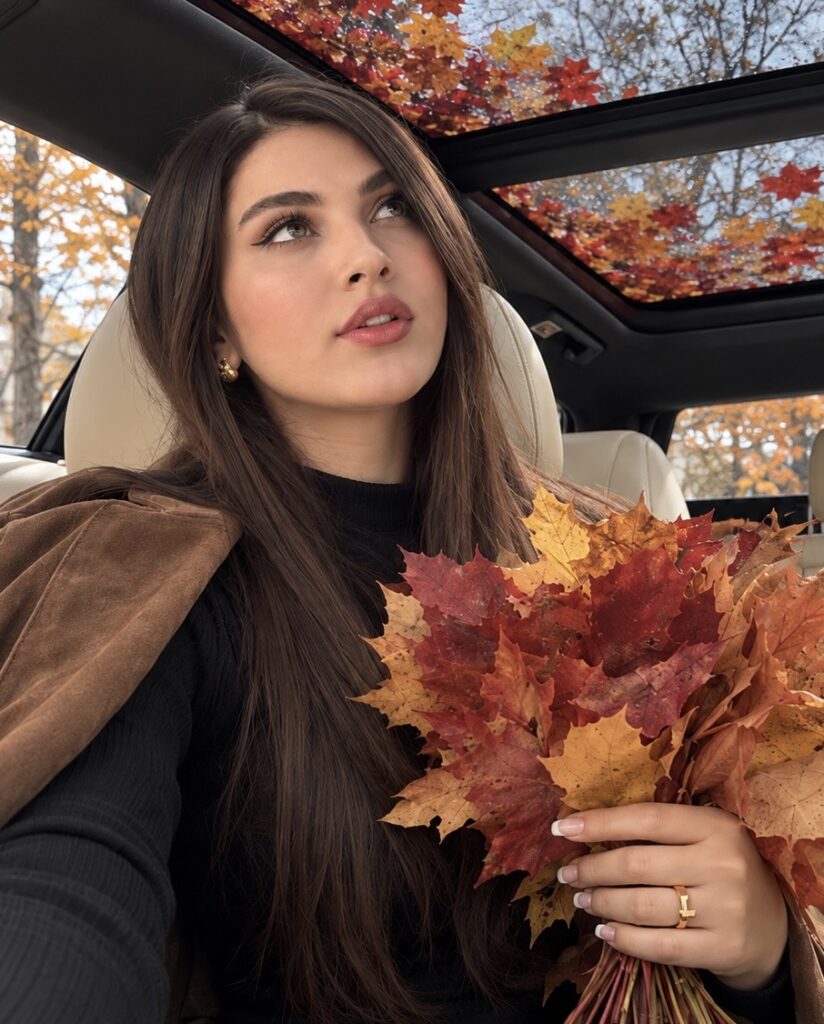
Create ONE ultra-realistic autumn lifestyle photograph in a 4:3 aspect ratio using the provided reference images with two strictly separated purposes.
REFERENCE IMAGE ROLES — CRITICAL:
REFERENCE IMAGE 1 = IDENTITY REFERENCE ONLY.
Use Reference Image 1 as the sole and exclusive source for the subject’s facial identity, recognizable appearance, facial anatomy, skin characteristics, and individual features.
REFERENCE IMAGE 2 = POSE AND COMPOSITION REFERENCE ONLY.
Use Reference Image 2 only to understand and recreate:
— the subject’s position inside the vehicle
— the backward leaning pose
— the head and neck angle
— the direction of the torso
— the relationship between the body and the open car door/window
— the camera perspective
— the general framing
— the placement of the car
— the autumn-road composition
DO NOT use Reference Image 2 as a source of facial identity, facial features, skin appearance, hair color, ethnicity, or recognizable appearance.
The woman in Reference Image 2 is NOT the identity of the final subject.
The final subject must have the exact recognizable identity of the person shown in Reference Image 1.
==================================================
IDENTITY PRESERVATION — ABSOLUTE HIGHEST PRIORITY
==================================================
The final photograph must depict the exact same real person shown in Reference Image 1.
Reference Image 1 is the sole identity source.
Preserve her exact recognizable facial identity and natural individuality, including:
— exact facial structure
— exact facial proportions
— exact head shape
— exact face shape
— exact eye shape and spacing
— eyebrows
— nose shape and proportions
— lips
— mouth shape
— jawline
— cheekbones
— ears when visible
— forehead proportions
— skin tone
— natural skin texture
— visible pores and fine skin detail
— natural facial asymmetry
— hairline
— all distinctive facial characteristics visible in Reference Image 1
Do NOT average the faces of the two reference images.
Do NOT transfer facial characteristics from Reference Image 2.
Do NOT make the subject resemble the woman in Reference Image 2.
Do NOT beautify, idealize, reconstruct, reshape, smooth, stylize, or reinterpret the face.
Do NOT create a conventionally attractive substitute or generic fashion model.
Do NOT create a lookalike or approximate version.
Do NOT alter:
— eye size or shape
— eye spacing
— eyebrow structure
— nose width or shape
— lip size or shape
— jaw width
— cheekbone structure
— forehead proportions
— facial width
— skin tone
— apparent age
— ethnicity
— distinctive facial characteristics
Preserve natural facial asymmetry.
Preserve realistic skin texture.
No artificial facial symmetry.
No beauty-filter face.
No plastic skin.
No facial reconstruction.
If maintaining the requested pose would cause the face to become less recognizable, slightly adapt the head angle rather than altering the facial anatomy.
IDENTITY ACCURACY TAKES PRIORITY OVER EVERY OTHER INSTRUCTION.
==================================================
EXACT POSE — VERY IMPORTANT
==================================================
Recreate the distinctive pose and body positioning demonstrated in Reference Image 2.
The subject is INSIDE the car.
Her lower body and hips remain inside the vehicle.
She is NOT standing beside the car.
She is NOT standing on the road.
She is NOT simply leaning against the exterior of the vehicle.
Instead, she leans her UPPER BODY dramatically but naturally BACKWARD AND OUTWARD from the open side door/window area of the car.
Her body must visibly originate from INSIDE the vehicle.
The open vehicle frame must clearly surround and visually connect to her body so there is absolutely no ambiguity that she is leaning outward from inside the car.
Her torso extends diagonally outward from the vehicle.
Her upper back forms a gentle natural arch.
Her shoulders move backward.
Her chest angles slightly upward.
Her neck extends naturally backward.
Her head is tilted significantly backward toward the sky.
Her chin points gently upward.
Her face is shown primarily in a natural three-quarter/profile orientation created by the backward head position.
Her eyes are peacefully closed.
Her lips remain naturally relaxed.
The expression communicates calmness, freedom, and enjoyment of the cool autumn air.
The pose should feel spontaneous rather than choreographed.
Avoid exaggerated fashion posing.
Avoid anatomically impossible bending.
The spine, shoulders, neck, arms, and torso must maintain believable human anatomy.
==================================================
CRITICAL BODY / VEHICLE RELATIONSHIP
==================================================
This relationship must be visually unmistakable:
LOWER BODY = INSIDE VEHICLE.
HIPS = INSIDE VEHICLE.
UPPER BODY = EXTENDING OUTWARD.
SHOULDERS = OUTSIDE VEHICLE.
HEAD = OUTSIDE VEHICLE.
The subject appears to have been sitting or positioned inside the car and then leaned her upper body backward through the open side door/window area to enjoy the autumn air.
Do NOT depict her standing outside the vehicle.
Do NOT show both feet planted on the road.
Do NOT make her look as though she walked up to the car and leaned against it.
Do NOT place her body completely outside the vehicle.
The visible open door/window structure must make her position inside the car obvious.
==================================================
HEAD POSITION AND EXPRESSION
==================================================
Recreate the peaceful backward head position from Reference Image 2.
The head tilts backward naturally.
The chin is elevated.
The neck remains anatomically realistic and elegant.
The eyes are naturally closed.
The mouth is relaxed.
Do not force a large smile.
A very subtle peaceful expression is acceptable.
IMPORTANT:
Even though the head angle differs from Reference Image 1, DO NOT reconstruct or reinterpret the face to accommodate the new angle.
Maintain the facial anatomy and identity defined by Reference Image 1.
The final person must still be immediately recognizable as the exact same person from Reference Image 1.
==================================================
HAIR
==================================================
Give the subject long, dark, naturally voluminous hair.
Keep the original recognizable hairline from Reference Image 1.
The hair should fall dramatically backward and downward because of:
— gravity
— the backward body position
— a gentle autumn breeze
The hair flows freely behind her toward the road and forest.
Create individually visible natural hair strands.
Some strands may lift slightly in the breeze.
Other strands should fall naturally under gravity.
The movement should feel organic and physically believable.
Do NOT create excessively perfect commercial hair.
Do NOT create artificial fan-blown hair.
Do NOT let the hair obscure the important facial features needed for identity recognition.
==================================================
WARDROBE
==================================================
Dress the subject in a very oversized knitted sweater.
Color:
soft creamy white / warm off-white.
The sweater should look:
— extremely cozy
— loose
— thick
— soft
— naturally oversized
— slightly heavy
The sleeves are long and loose and extend toward or partially over the hands.
The knit must contain realistic textile detail:
— individual fibers
— knit loops
— natural folds
— fabric thickness
— stretching
— compression
— realistic weight
— natural deformation caused by the leaning pose
The sweater must react realistically to gravity and the position of the torso.
Lower clothing should remain mostly hidden because the lower body is inside the vehicle.
Avoid tight clothing.
Avoid glamorous fashion styling.
==================================================
SKIN AND MAKEUP
==================================================
Preserve realistic skin.
Visible natural fine texture and pores.
Use extremely subtle, natural makeup suitable for a casual autumn lifestyle photograph.
The makeup must NOT modify facial anatomy.
Use:
— natural complexion
— subtle eye definition
— restrained natural lashes
— very subtle lip gloss
No heavy contouring.
No enlarged eyes.
No artificial eyelashes.
No narrowed nose.
No reshaped lips.
No sharpened jaw.
No excessive blush.
No skin smoothing.
No beauty filter.
==================================================
CAR
==================================================
Use a realistic dark-colored modern passenger car.
The car occupies primarily the RIGHT side of the composition, similar to Reference Image 2.
The relevant side door/window area is fully open.
The door/window frame remains clearly visible.
The vehicle should have:
— realistic glossy paint
— subtle autumn-tree reflections
— realistic glass
— physically accurate metal surfaces
— natural environmental reflections
— realistic interior shadows
Do not make the car the primary subject.
The woman remains the visual focus.
The car exists primarily to establish the pose and road-trip context.
==================================================
CAMERA POSITION AND COMPOSITION
==================================================
Use Reference Image 2 as the primary composition guide.
The photographer is OUTSIDE the vehicle.
The camera is relatively close to the subject.
Use a slightly elevated candid smartphone perspective looking toward the subject and the road behind her.
The composition should prominently show:
— the subject leaning backward from inside the vehicle
— her flowing hair
— the open car frame on the right
— the winding autumn road
— dense forest surrounding the road
The road begins near the foreground and continues deep into the background.
It gently curves and disappears into the autumn forest.
The subject occupies a strong foreground position.
The car remains visible along the right edge.
The forest and road create strong natural depth.
The framing should feel spontaneous and slightly imperfect, as though someone traveling with her quickly captured the moment on a smartphone.
Do NOT create perfectly centered commercial composition.
Do NOT make it look like a fashion advertisement.
==================================================
ENVIRONMENT
==================================================
Place the vehicle on a narrow, quiet forest road during peak autumn.
Dense woodland surrounds both sides of the road.
Use naturally varied autumn foliage:
— burnt orange
— rusty red
— deep red
— golden yellow
— warm brown
— muted green
Some trees still retain dense autumn leaves.
Others have partially lost their foliage.
The road and roadside contain scattered fallen leaves.
Include realistic environmental details:
— fallen leaves
— small branches
— darker damp soil
— irregular vegetation
— tree trunks
— patches of moss
— uneven roadside foliage
— scattered leaves near the vehicle
Avoid decorative or perfectly arranged foliage.
Nature must look random and authentic.
==================================================
ROAD
==================================================
Create a realistic narrow paved forest road.
The road stretches behind the subject and curves gently through the forest.
The asphalt should contain subtle natural imperfections.
Some areas may appear slightly damp from autumn weather.
Scattered leaves naturally cover portions of the asphalt.
The road must create strong perspective depth.
Do not create an unrealistically pristine road.
==================================================
LIGHTING
==================================================
Use soft, diffused natural daylight from an overcast autumn sky.
The light should be:
— soft
— slightly cool
— muted
— natural
— evenly diffused
No direct harsh sunlight.
No studio lights.
No artificial rim lighting.
No glamour lighting.
No exaggerated cinematic glow.
The same environmental light must naturally illuminate:
— face
— neck
— hair
— sweater
— hands
— vehicle
— road
— trees
The subject must appear physically present in the environment.
Do NOT illuminate the face independently from the scene.
Maintain believable shadow direction and intensity.
==================================================
PHOTOGRAPHIC AESTHETIC
==================================================
The photograph should resemble an authentic premium smartphone photograph captured spontaneously during an autumn road trip.
Use:
— realistic smartphone optics
— subtle wide-angle characteristics
— natural perspective
— realistic optical distortion
— high dynamic range without artificial HDR
— realistic exposure
— natural shadow detail
— subtle photographic imperfections
— realistic depth of field
The background should remain clearly recognizable.
Do NOT use extreme portrait-mode blur.
Do NOT distort the face using excessive wide-angle perspective.
The result should feel like a genuine candid photograph rather than a professional photoshoot.
==================================================
AUTUMN ATMOSPHERE
==================================================
Create the feeling of cool, fresh autumn air.
A very gentle breeze moves the subject’s hair and a few nearby leaves.
The environment feels:
— quiet
— intimate
— peaceful
— slightly nostalgic
— cozy
— spontaneous
— authentic
The subject appears to be enjoying a peaceful moment during an autumn drive through the forest.
The image may have a refined Pinterest / Instagram lifestyle feeling, but it must remain grounded in photographic realism.
==================================================
REALISM REQUIREMENTS
==================================================
Ultra-photorealistic photography.
Natural human anatomy.
Correct shoulder anatomy.
Correct neck anatomy.
Correct torso anatomy.
Realistic hands.
Five anatomically correct fingers per visible hand.
Realistic hair physics.
Realistic gravity.
Realistic knitted textile physics.
Natural skin texture.
Visible fine facial detail.
Realistic vehicle geometry.
Accurate vehicle reflections.
Realistic glass.
Realistic asphalt.
Natural foliage.
Physically believable lighting.
Natural atmospheric perspective.
No CGI appearance.
No illustration.
No artificial beauty-filter aesthetic.
==================================================
AVOID / NEGATIVE CONSTRAINTS
==================================================
Do NOT use Reference Image 2 for identity.
Do NOT merge the faces from Reference Images 1 and 2.
Do NOT reproduce the facial features of the woman in Reference Image 2.
Do NOT create a generic beautiful woman.
Do NOT create a lookalike.
Do NOT alter facial proportions.
Do NOT beautify the identity.
Do NOT smooth the skin.
Do NOT create plastic skin.
Do NOT enlarge the eyes.
Do NOT narrow or reshape the nose.
Do NOT modify the lips.
Do NOT sharpen or narrow the jaw.
Do NOT change apparent age.
Do NOT change ethnicity.
Do NOT create artificial facial symmetry.
Do NOT create a doll-like face.
Do NOT create a CGI face.
Do NOT use excessive makeup.
Do NOT make the subject stand beside the car.
Do NOT place both feet on the road.
Do NOT make the subject lean against the outside of the car.
Do NOT position the entire body outside the vehicle.
Do NOT make the pose anatomically impossible.
Do NOT use excessive background blur.
Do NOT create artificial autumn colors.
Do NOT create excessive hair movement.
Do NOT create fashion-campaign lighting.
Do NOT over-retouch the photograph.
==================================================
FINAL PRIORITY ORDER
==================================================
PRIORITY 1:
Exact recognizable identity from Reference Image 1.
PRIORITY 2:
The inside-the-car, backward-and-outward leaning pose demonstrated in Reference Image 2.
PRIORITY 3:
Natural human anatomy and physically believable body positioning.
PRIORITY 4:
Autumn forest road, dark car, oversized cream sweater, flowing hair, and environmental realism.
PRIORITY 5:
Candid smartphone photographic aesthetic.
Reference Image 1 defines WHO the subject is.
Reference Image 2 defines ONLY HOW the subject is positioned and HOW the photograph is composed.
Never allow the facial appearance of Reference Image 2 to influence the identity.
The final result must look like a genuine candid photograph of the EXACT SAME REAL PERSON from Reference Image 1, sitting/positioned inside a dark car and leaning her upper body backward and outward through the open side door/window area, with her head tilted peacefully backward, eyes closed, and long hair flowing naturally toward the autumn forest road.
The image must NOT look like an AI-generated variation, a beautified reconstruction, a face blend, or a similar-looking person.
OUTPUT:
One single ultra-realistic photograph.
Aspect ratio: 4:3.
No text.
No watermark.
No collage.
REFERENCE IMAGE ROLES — CRITICAL:
REFERENCE IMAGE 1 = IDENTITY REFERENCE ONLY.
Use Reference Image 1 as the sole and exclusive source for the subject’s facial identity, recognizable appearance, facial anatomy, skin characteristics, and individual features.
REFERENCE IMAGE 2 = POSE AND COMPOSITION REFERENCE ONLY.
Use Reference Image 2 only to understand and recreate:
— the subject’s position inside the vehicle
— the backward leaning pose
— the head and neck angle
— the direction of the torso
— the relationship between the body and the open car door/window
— the camera perspective
— the general framing
— the placement of the car
— the autumn-road composition
DO NOT use Reference Image 2 as a source of facial identity, facial features, skin appearance, hair color, ethnicity, or recognizable appearance.
The woman in Reference Image 2 is NOT the identity of the final subject.
The final subject must have the exact recognizable identity of the person shown in Reference Image 1.
==================================================
IDENTITY PRESERVATION — ABSOLUTE HIGHEST PRIORITY
==================================================
The final photograph must depict the exact same real person shown in Reference Image 1.
Reference Image 1 is the sole identity source.
Preserve her exact recognizable facial identity and natural individuality, including:
— exact facial structure
— exact facial proportions
— exact head shape
— exact face shape
— exact eye shape and spacing
— eyebrows
— nose shape and proportions
— lips
— mouth shape
— jawline
— cheekbones
— ears when visible
— forehead proportions
— skin tone
— natural skin texture
— visible pores and fine skin detail
— natural facial asymmetry
— hairline
— all distinctive facial characteristics visible in Reference Image 1
Do NOT average the faces of the two reference images.
Do NOT transfer facial characteristics from Reference Image 2.
Do NOT make the subject resemble the woman in Reference Image 2.
Do NOT beautify, idealize, reconstruct, reshape, smooth, stylize, or reinterpret the face.
Do NOT create a conventionally attractive substitute or generic fashion model.
Do NOT create a lookalike or approximate version.
Do NOT alter:
— eye size or shape
— eye spacing
— eyebrow structure
— nose width or shape
— lip size or shape
— jaw width
— cheekbone structure
— forehead proportions
— facial width
— skin tone
— apparent age
— ethnicity
— distinctive facial characteristics
Preserve natural facial asymmetry.
Preserve realistic skin texture.
No artificial facial symmetry.
No beauty-filter face.
No plastic skin.
No facial reconstruction.
If maintaining the requested pose would cause the face to become less recognizable, slightly adapt the head angle rather than altering the facial anatomy.
IDENTITY ACCURACY TAKES PRIORITY OVER EVERY OTHER INSTRUCTION.
==================================================
EXACT POSE — VERY IMPORTANT
==================================================
Recreate the distinctive pose and body positioning demonstrated in Reference Image 2.
The subject is INSIDE the car.
Her lower body and hips remain inside the vehicle.
She is NOT standing beside the car.
She is NOT standing on the road.
She is NOT simply leaning against the exterior of the vehicle.
Instead, she leans her UPPER BODY dramatically but naturally BACKWARD AND OUTWARD from the open side door/window area of the car.
Her body must visibly originate from INSIDE the vehicle.
The open vehicle frame must clearly surround and visually connect to her body so there is absolutely no ambiguity that she is leaning outward from inside the car.
Her torso extends diagonally outward from the vehicle.
Her upper back forms a gentle natural arch.
Her shoulders move backward.
Her chest angles slightly upward.
Her neck extends naturally backward.
Her head is tilted significantly backward toward the sky.
Her chin points gently upward.
Her face is shown primarily in a natural three-quarter/profile orientation created by the backward head position.
Her eyes are peacefully closed.
Her lips remain naturally relaxed.
The expression communicates calmness, freedom, and enjoyment of the cool autumn air.
The pose should feel spontaneous rather than choreographed.
Avoid exaggerated fashion posing.
Avoid anatomically impossible bending.
The spine, shoulders, neck, arms, and torso must maintain believable human anatomy.
==================================================
CRITICAL BODY / VEHICLE RELATIONSHIP
==================================================
This relationship must be visually unmistakable:
LOWER BODY = INSIDE VEHICLE.
HIPS = INSIDE VEHICLE.
UPPER BODY = EXTENDING OUTWARD.
SHOULDERS = OUTSIDE VEHICLE.
HEAD = OUTSIDE VEHICLE.
The subject appears to have been sitting or positioned inside the car and then leaned her upper body backward through the open side door/window area to enjoy the autumn air.
Do NOT depict her standing outside the vehicle.
Do NOT show both feet planted on the road.
Do NOT make her look as though she walked up to the car and leaned against it.
Do NOT place her body completely outside the vehicle.
The visible open door/window structure must make her position inside the car obvious.
==================================================
HEAD POSITION AND EXPRESSION
==================================================
Recreate the peaceful backward head position from Reference Image 2.
The head tilts backward naturally.
The chin is elevated.
The neck remains anatomically realistic and elegant.
The eyes are naturally closed.
The mouth is relaxed.
Do not force a large smile.
A very subtle peaceful expression is acceptable.
IMPORTANT:
Even though the head angle differs from Reference Image 1, DO NOT reconstruct or reinterpret the face to accommodate the new angle.
Maintain the facial anatomy and identity defined by Reference Image 1.
The final person must still be immediately recognizable as the exact same person from Reference Image 1.
==================================================
HAIR
==================================================
Give the subject long, dark, naturally voluminous hair.
Keep the original recognizable hairline from Reference Image 1.
The hair should fall dramatically backward and downward because of:
— gravity
— the backward body position
— a gentle autumn breeze
The hair flows freely behind her toward the road and forest.
Create individually visible natural hair strands.
Some strands may lift slightly in the breeze.
Other strands should fall naturally under gravity.
The movement should feel organic and physically believable.
Do NOT create excessively perfect commercial hair.
Do NOT create artificial fan-blown hair.
Do NOT let the hair obscure the important facial features needed for identity recognition.
==================================================
WARDROBE
==================================================
Dress the subject in a very oversized knitted sweater.
Color:
soft creamy white / warm off-white.
The sweater should look:
— extremely cozy
— loose
— thick
— soft
— naturally oversized
— slightly heavy
The sleeves are long and loose and extend toward or partially over the hands.
The knit must contain realistic textile detail:
— individual fibers
— knit loops
— natural folds
— fabric thickness
— stretching
— compression
— realistic weight
— natural deformation caused by the leaning pose
The sweater must react realistically to gravity and the position of the torso.
Lower clothing should remain mostly hidden because the lower body is inside the vehicle.
Avoid tight clothing.
Avoid glamorous fashion styling.
==================================================
SKIN AND MAKEUP
==================================================
Preserve realistic skin.
Visible natural fine texture and pores.
Use extremely subtle, natural makeup suitable for a casual autumn lifestyle photograph.
The makeup must NOT modify facial anatomy.
Use:
— natural complexion
— subtle eye definition
— restrained natural lashes
— very subtle lip gloss
No heavy contouring.
No enlarged eyes.
No artificial eyelashes.
No narrowed nose.
No reshaped lips.
No sharpened jaw.
No excessive blush.
No skin smoothing.
No beauty filter.
==================================================
CAR
==================================================
Use a realistic dark-colored modern passenger car.
The car occupies primarily the RIGHT side of the composition, similar to Reference Image 2.
The relevant side door/window area is fully open.
The door/window frame remains clearly visible.
The vehicle should have:
— realistic glossy paint
— subtle autumn-tree reflections
— realistic glass
— physically accurate metal surfaces
— natural environmental reflections
— realistic interior shadows
Do not make the car the primary subject.
The woman remains the visual focus.
The car exists primarily to establish the pose and road-trip context.
==================================================
CAMERA POSITION AND COMPOSITION
==================================================
Use Reference Image 2 as the primary composition guide.
The photographer is OUTSIDE the vehicle.
The camera is relatively close to the subject.
Use a slightly elevated candid smartphone perspective looking toward the subject and the road behind her.
The composition should prominently show:
— the subject leaning backward from inside the vehicle
— her flowing hair
— the open car frame on the right
— the winding autumn road
— dense forest surrounding the road
The road begins near the foreground and continues deep into the background.
It gently curves and disappears into the autumn forest.
The subject occupies a strong foreground position.
The car remains visible along the right edge.
The forest and road create strong natural depth.
The framing should feel spontaneous and slightly imperfect, as though someone traveling with her quickly captured the moment on a smartphone.
Do NOT create perfectly centered commercial composition.
Do NOT make it look like a fashion advertisement.
==================================================
ENVIRONMENT
==================================================
Place the vehicle on a narrow, quiet forest road during peak autumn.
Dense woodland surrounds both sides of the road.
Use naturally varied autumn foliage:
— burnt orange
— rusty red
— deep red
— golden yellow
— warm brown
— muted green
Some trees still retain dense autumn leaves.
Others have partially lost their foliage.
The road and roadside contain scattered fallen leaves.
Include realistic environmental details:
— fallen leaves
— small branches
— darker damp soil
— irregular vegetation
— tree trunks
— patches of moss
— uneven roadside foliage
— scattered leaves near the vehicle
Avoid decorative or perfectly arranged foliage.
Nature must look random and authentic.
==================================================
ROAD
==================================================
Create a realistic narrow paved forest road.
The road stretches behind the subject and curves gently through the forest.
The asphalt should contain subtle natural imperfections.
Some areas may appear slightly damp from autumn weather.
Scattered leaves naturally cover portions of the asphalt.
The road must create strong perspective depth.
Do not create an unrealistically pristine road.
==================================================
LIGHTING
==================================================
Use soft, diffused natural daylight from an overcast autumn sky.
The light should be:
— soft
— slightly cool
— muted
— natural
— evenly diffused
No direct harsh sunlight.
No studio lights.
No artificial rim lighting.
No glamour lighting.
No exaggerated cinematic glow.
The same environmental light must naturally illuminate:
— face
— neck
— hair
— sweater
— hands
— vehicle
— road
— trees
The subject must appear physically present in the environment.
Do NOT illuminate the face independently from the scene.
Maintain believable shadow direction and intensity.
==================================================
PHOTOGRAPHIC AESTHETIC
==================================================
The photograph should resemble an authentic premium smartphone photograph captured spontaneously during an autumn road trip.
Use:
— realistic smartphone optics
— subtle wide-angle characteristics
— natural perspective
— realistic optical distortion
— high dynamic range without artificial HDR
— realistic exposure
— natural shadow detail
— subtle photographic imperfections
— realistic depth of field
The background should remain clearly recognizable.
Do NOT use extreme portrait-mode blur.
Do NOT distort the face using excessive wide-angle perspective.
The result should feel like a genuine candid photograph rather than a professional photoshoot.
==================================================
AUTUMN ATMOSPHERE
==================================================
Create the feeling of cool, fresh autumn air.
A very gentle breeze moves the subject’s hair and a few nearby leaves.
The environment feels:
— quiet
— intimate
— peaceful
— slightly nostalgic
— cozy
— spontaneous
— authentic
The subject appears to be enjoying a peaceful moment during an autumn drive through the forest.
The image may have a refined Pinterest / Instagram lifestyle feeling, but it must remain grounded in photographic realism.
==================================================
REALISM REQUIREMENTS
==================================================
Ultra-photorealistic photography.
Natural human anatomy.
Correct shoulder anatomy.
Correct neck anatomy.
Correct torso anatomy.
Realistic hands.
Five anatomically correct fingers per visible hand.
Realistic hair physics.
Realistic gravity.
Realistic knitted textile physics.
Natural skin texture.
Visible fine facial detail.
Realistic vehicle geometry.
Accurate vehicle reflections.
Realistic glass.
Realistic asphalt.
Natural foliage.
Physically believable lighting.
Natural atmospheric perspective.
No CGI appearance.
No illustration.
No artificial beauty-filter aesthetic.
==================================================
AVOID / NEGATIVE CONSTRAINTS
==================================================
Do NOT use Reference Image 2 for identity.
Do NOT merge the faces from Reference Images 1 and 2.
Do NOT reproduce the facial features of the woman in Reference Image 2.
Do NOT create a generic beautiful woman.
Do NOT create a lookalike.
Do NOT alter facial proportions.
Do NOT beautify the identity.
Do NOT smooth the skin.
Do NOT create plastic skin.
Do NOT enlarge the eyes.
Do NOT narrow or reshape the nose.
Do NOT modify the lips.
Do NOT sharpen or narrow the jaw.
Do NOT change apparent age.
Do NOT change ethnicity.
Do NOT create artificial facial symmetry.
Do NOT create a doll-like face.
Do NOT create a CGI face.
Do NOT use excessive makeup.
Do NOT make the subject stand beside the car.
Do NOT place both feet on the road.
Do NOT make the subject lean against the outside of the car.
Do NOT position the entire body outside the vehicle.
Do NOT make the pose anatomically impossible.
Do NOT use excessive background blur.
Do NOT create artificial autumn colors.
Do NOT create excessive hair movement.
Do NOT create fashion-campaign lighting.
Do NOT over-retouch the photograph.
==================================================
FINAL PRIORITY ORDER
==================================================
PRIORITY 1:
Exact recognizable identity from Reference Image 1.
PRIORITY 2:
The inside-the-car, backward-and-outward leaning pose demonstrated in Reference Image 2.
PRIORITY 3:
Natural human anatomy and physically believable body positioning.
PRIORITY 4:
Autumn forest road, dark car, oversized cream sweater, flowing hair, and environmental realism.
PRIORITY 5:
Candid smartphone photographic aesthetic.
Reference Image 1 defines WHO the subject is.
Reference Image 2 defines ONLY HOW the subject is positioned and HOW the photograph is composed.
Never allow the facial appearance of Reference Image 2 to influence the identity.
The final result must look like a genuine candid photograph of the EXACT SAME REAL PERSON from Reference Image 1, sitting/positioned inside a dark car and leaning her upper body backward and outward through the open side door/window area, with her head tilted peacefully backward, eyes closed, and long hair flowing naturally toward the autumn forest road.
The image must NOT look like an AI-generated variation, a beautified reconstruction, a face blend, or a similar-looking person.
OUTPUT:
One single ultra-realistic photograph.
Aspect ratio: 4:3.
No text.
No watermark.
No collage.
پرامپتها رو کپی کن و توی ChatGPT، Claude یا هر ابزار AI دیگهای استفاده کن